We have moved / Taşındık!

If you're reading this, you've come to the old home for the James in Turkey website. The website has changed servers and adopted a new look ahead of the 2014 local election.

For the latest Turkish politics and election analysis from Michael Daventry redirect your bookmarks to jamesinturkey.com.

Tuesday, 29 May 2012

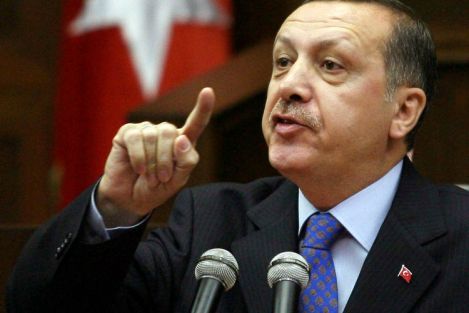
The two faces of Recep Tayyip Erdoğan

Comments made this week on abortion demonstrate a serious character flaw in Turkey's prime minister.


Last week, addressing a UN conference on population and development, Recep Tayyip Erdoğan said: "I am a prime minister who is against caesarean births. I consider abortion to be murder."

Two days ago, he went even further. Speaking to a meeting of his AK Party - a meeting of his party's women's branch, no less - the Turkish prime minister explained how he considered caesareans to be part of "organised attempts to prevent the country's population from increasing. They are attempting to keep this country's population stops at a certain level."

"Every abortion," he went on, "is an Uludere", referring to the southeastern village close to where 35 civilians were killed in a botched airstrike. "I ask you, what difference is there between killing a child in the mother's womb, or killing after birth?

"We are compelled to fight this all together, because it is a sinister plan to wipe out this nation from the face of the earth. To allow this nation to multiply, we must not play to these games."

The prime minister's remarks were preposterous, yet utterly in character.

Preposterous, because Uludere is such a dreadful analogy to use. One is a human tragedy, the other is a position of social morality. The 35 civilians were killed in December last year by Turkish F16s after being spotted hiking their way across a mountain from Iraq. They were suspected members of the PKK; it turned out they were smuggling cigarettes and diesel.

The Uludere incident provoked outrage and street demonstrations across Turkey. Mr Erdoğan's government promised recompense to the victim's families and a full investigation, but refused to apologise. Mr Erdoğan himself appeared bemused that, months later, certain sections of the media were still running campaigns for justice and transparency. It was to these outlets that he addressed his foolish Uludere/abortion line this weekend.

It is incidents like these that demonstrate how there are two Recep Tayyip Erdoğans. The first is the darling of the Western world, that astute friend of foreign investment and face of moderate Islam, who managed what his predecessors could not by pushing the army out of day-to-day politics. The second is the boorish, pious conservative whose views on family planning, women's rights and alcohol reveal a man who would relish the opportunity for a spot of social engineering.

The conflict between the two is stark: Mr Erdoğan's policies in support of greater business policies makes him quite an economic liberal, but socially his record must rank him among Europe's most illiberal. In 2004, he notoriously tried to introduce legislation that would criminalise adultery. After his 2007 re-election, he used his new-found paternalist image to roll out a spot of social engineering by demanding every Turkish family gives birth to three children.

His comments on abortion and caesareans this week could possibly be spun as a moment of confusion - does he *really* think caesareans are a population-controlling tool? His earnest health minister Recep Akdağ did try to explain that the government was planning a crackdown on unnecessary c-sections conducted by private hospitals wanting to claim a higher insurance premium, but Mr Erdoğan made no such announcement to his party's women's corps.

Instead, rumours abound in the Turkish press this week that the government is preparing to outlaw abortion. The governing AK Party's shoddy record in personal freedoms is evidence enough that such hearsay could be based on the truth.

We've all heard plenty about the growing authoritarian strand in Turkey's government, from imprisoned journalists to dodgy business deals. Much of it has been justified - or at least tolerated - by pointing to past decade's marked improvement in Turkish living standards and the military's reduced influence over everyday life. The question is, when will Turks reach the stage when they think Recep Tayyip Erdoğan's AK Party is no longer worth the trouble?

Tuesday, 27 March 2012

Being gay in Turkey's army

If you haven't seen it already, Emre Azizlerli from the BBC has produced a comprehensive and accurate account of what Turkish gay men have to endure before they can clinch a much-cherished exemption from military service.BBC image

"They asked me when I first had anal intercourse, oral sex, what sort of toys I played with as a child," one man is quoted as saying. Have a read, or listen to the whole documentary here.

The Turkish general staff refused to give Emre Azizlerli an interview. They didn't even provide a comment. This is hardly surprising: for all the talk about the army "defending" secularism against a pious government, it is still an extremely conservative institution that fiercely resists any form of progressive thought. It had an entirely separate judiciary as recently as three years ago. Soldiers would always be tried in military courts, irrespective of whether they attacked a superior or stole a car.

The conservatism applies to its approach to gay recruits too. Their defintion of homosexuality comes from an Amercian Psychiatric Association paper in 1968, Azizlerli writes. That's clearly outdated and wrong, and needs to change.

Turkish society is a only little more open-minded than its armed forces. Homosexuality is not a criminal offence - which, for a Muslim-majority country, is saying something - but that doesn't make Turkey an easy country to be gay in, especially outside towns like Istanbul, Ankara and Izmir. Most families would consider a gay son a disgrace; homosexuality in women is barely acknowledged.

There are, however, signs of shifting attitudes, albeit at a glacial pace. When Selma Aliye Kavaf, a cabinet minister for women and family issues, said in a 2010 newspaper interview that she believed homosexuality is "a biological failure, an illness" and "something that needs treatment", she was widely censured. Gay rights groups protested her comments and a lively debate about homosexuality ensued in television chat shows. She was even publicly criticised by a cabinet colleague, health minister Recep Akdağ, who said Turkey is not an easy place to be gay.

Ms Kavaf's AK Party deselected her from the party list ahead of last year's election. The vehemence of the reaction against her, and Mr Akdağ's subsequent comments, demonstrates Turkey is no stereotypical Muslim country. But there is so much more to do, and enshrining sexual orientation in the new constitution would be a start.

Saturday, 18 February 2012

After Erdoğan

As these words buzz their way across the interweb to you, Turkey's prime minister is at home in Istanbul. He's not running the country; he's recuperating after surgery. It's a relatively routine procedure relating to his digestive system and it's certainly not life-threatening: he'll be back denouncing some rival or another at his party's parliamentary meeting in no time.
In a press release announcing the hospital visit, the office of Recep Tayyip Erdogan (for it is he) sounded almost anxious. The operation went "as planned at the beginning", we are told. "Our Prime Minister's health is absolutely fine. He plans to resume his routine engagements later in the week."
And so he did. He met the son of Bosnia-Herzegovina's founding president, then spoke on the telephone to his British counterpart David Cameron about Syria. Can't say fairer than that, really. Roll on next week's return to parliament.
But as Turkish domestic politics ticked along with routine and not-so-routine developments over the past few months of Mr Erdoğan's hospital treatment, it often fell to other people - such as Deputy Prime Minister Bülent Arınç - to speak for Turkey's government. For the first time in ten years, the talking head for the Turkish government has been not been Mr Erdoğan.
Don't let me mislead you: I'm not saying the prime minister is on his way out. He isn't. He intends to see out tenth year of his job in March 2013, and most likely the eleventh year too. Barring the unforeseen, there's very little that can unseat him until then. His party is riding high in opinion polls and loyalty to him within the party is strong.
But Mr Erdoğan's absence in recuperation might have shown us what the future looks like. Parliament recently decided that Turkey's first popular presidential election will be held in 2014 and Ankara's worst kept secret is that the prime minister wants the job for himself. If he does, he will win. He's more than popular enough to do it.
I first wrote about Mr Erdogan's presidential ambitions in 2006. At the time I said that a candidate for president requires experience, must be known by the public and liked by the public. He had no trouble meeting the last two criteria, I wrote, but as prime minister for a little under four years he did not have that statesmanlike quality - experience in government, knowing how the country runs - that an ideal president needs.
Since I wrote that, Mr Erdogan solidified his public support with victories in two general elections and two referenda. He challenged the Turkish army's influence over the state and won. He established himself as an internationally recognised leader for modern Islam. Whether or not you agree with his politics, the statesmanlike quality is now there.
President Erdoğan would assume his position with just under a year to go before parliamentary elections due by June 2015. The AK Party campaign would be led by a new man. The contenders to be that man are the usual suspects: Mr Arınç; Ahmet Davutoğlu, the foreign minister; Cemil Çiçek, the speaker of parliament; Ali Babacan, another deputy prime minster; or even Abdullah Gül, the current and ostensibly party-neutral president.
The problem is that there is no guarantee that any of these men would inherit the same job Mr Erdoğan vacates. A special parliamentary committee is currently working under Mr Çiçek's leadership to put together a new constitution, a new blueprint for Turkey's institutions which could produce a radical shake-up.
Mr Erdoğan is widely understood to favour a French-style presidential system with himself at the top. That would be a hefty change from the existing arrangement. The role of Turkey's president is notionally ceremonial, but holds considerable indirect influence over the country's institutions. The prime minister, meanwhile, holds more direct executive powers than in many Western democracies; if Mr Erdoğan had his way, a lot of these would simply transfer upward with him.
There is, however, widespread opposition to these plans. Prominent members of Mr Erdoğan's party - including some of those who might contend for his job - have publicly said a presidential system is not desirable to them. Much expends on what the new constitution looks like: little is known so far about the changes, if any, that will be made to the structure of Turkey's executive and legislature.
The new constitution will have to be approved by referendum and may require a renewed parliamentary mandate afterwards. That would mean fresh and early elections, in which Mr Erdoğan would lead his party once more.
The main question over Mr Erdoğan's future is not who will succeed him. It concerns the amount of executive power he thinks he can get away with as president. Watch parliament's constitution committee closely for an answer to that.

Sunday, 23 October 2011

Here we go again

In the last three hours, a 7.2-magnitude earthquake struck the eastern Turkish province of Van. The first images from towns in the area show plenty of destruction: buildings in rubble, parked cars crushed under falling debris, residents shifting bricks and mortar to reach those trapped beneath. There are reports of student housing collapsed in the town of Erciş.

To most Turks, these images - and Turkish television's coverage - are chillingly familiar. Communications are severely disrupted by the sheer number of trying to contact loved ones, which makes it difficult to build a picture of the damage. No fatalities are yet confirmed but lives will have certainly be lost: shoddy construction techniques will have ensured that. It feels exactly like that fateful night of Tuesday 17 August 1999. At least 20 thousand people died in that earthquake.

But there are differences between then and now. The Turkish Red Crescent's response has been swift, with thousands of tents and supplies of drinking water despatched immediately to Van. Appeals have been launched through the media for local businessmen with diggers and other heavy machinery to come forward, and for ordinary citizens to keep the roads clear by not driving themselves to the earthquake zone to see if they can help. This "disaster tourism" was a major obstacle to relief efforts after the 17 August quake struck.

Turkish building methods, once again, have a lot to answer for, but at least disaster-relief lessons appear to be learnt.

Thursday, 13 October 2011

Printing the explicit photo of a woman stabbed by her husband was the right thing to do. Sadly, it didn't work.

The woman is topless, lying face down on a hospital bed. Out of her back, a little above her waist, protrudes the wooden handle of a large knife. Only a small part of the blade is visible; the rest is buried deep into her abdomen. There is remarkably little blood, but the photograph is no less horrifying. It's a harrowing sight.

It appeared on the front page of last Friday's Habertürk, one of Turkey's most popular newspapers, intended to raise awareness of domestic violence in the family. The woman in the photograph, who later died, was beaten regularly by her husband.

A carefully-chosen, striking photograph in a mass-circulation newspaper can sometimes do in a day what a well-organised pressure group can't in a year: it can whip up public anger, steal the agenda and force someone somewhere to start changing a law.

This photograph, which you can see for yourself by clicking the link at the bottom of this post, is certainly shocking enough to do that. But it didn't work: a week has gone by since that edition of Haberturk went to press, and yet more Turks appear angry at at the editor for printing the photograph than at the husband for wielding the knife.

Women's rights groups gathered outside Habertürk's offices to protest on Sunday demanding a withdrawal and apology from Fatih Altaylı, the paper's editor. Think of the children who saw it in all its lurid detail, they said. Mediz, a media monitor for women's rights, called the photograph "the ultimate stage in pornography" (referencing Habertürk's headline, "the ultimate stage in violence towards women") and said the newspaper had become a perpetrator of the violence by publishing it. Even Recep Tayyip Erdoğan, the prime minister, disagreed with the decision.

But Mr Altaylı has been bullish. "I would have printed this even if it was a photograph of my own mother. In fact, I would have enlarged it," he wrote in an editorial on Saturday. "I printed it so that my 11-year-old daughter could see, at her young age, the violence that a male-dominated society inflicts on women. I printed it so she could learn to reproach those who remain silent." An article in the Wall Street Journal has him go further:
Mr. Altayli described women's-rights organizations that protested outside the newspaper's offices Sunday as "idiots" who knew nothing about "real life" and what it took to make the government act. "I knew people would criticize me, that they would say I was cruel, but someone had to do it," he said in an interview on Tuesday. "Another six women have been killed since her."
The figures given by the Wall Street Journal are chilling enough: 42 percent of Turkish women say they have suffered physical or sexual abuse from their partner. Nearly half of those victims didn't tell a soul what happened; an astonishing 92 percent didn't seek what little help the authorities can give. Şefika Etik, the victim in the Habertürk photograph, was one of the rare few who actually took refuge at a safe house before her husband came calling a reconciliation. He had a bunch of flowers, Habertürk reports, and was extremely sorry. Within an hour of her return home, the knives came out.

This photograph was printed to horrify and provoke, and it succeeded on both counts. The anger at Mr Altaylı has been palpable. Journalists from Habertürk and rival papers alike have written to criticise the decision to publish. One commentator writing in Bugün, a centre-right daily, questioned Mr Altaylı's apparent conversion to feminism by trawling through some of his earlier journalism, which includes some unflattering stories about a long-distance runner who had an affair with her personal trainer.

But however sinister Mr Altaylı's motives may or may not be, and even if he only wants to sell more newspapers, he has brought prominence to a shameful truth about the place of women in Turkish society. In too many marriages Turkish women are "bequeathed" into the moral ownership of their husbands. Mr Erdoğan's government has shied away from daycare projects to help mothers back into work, abolished a cabinet portfolio for women's rights in favour a Ministry for Families, and frequently calls for newlyweds to aim for "at least" three children. These policies reflect a deeply conservative strain in Turkish society that promotes the family unit over the individual; Mr Altaylı's critics, many of them liberal-minded, are guilty of pretending that strain doesn't exist.

Click here, with caution, to see the Habertürk front page for Friday 7 October 2011

Sunday, 12 June 2011

Election 2007: timetable of events

Following on from yesterday's missive, a quick guide for when to expect what in Turkey's election today. Let's hope for a few surprises.

7am - voting begins in 32 eastern provinces, 8am in the west.
4pm - voting closes in the east, 5pm everywhere else. Counting begins soon after the queuing remainders have voted.
6pm - first results start trickling in to newswires and Twitter. Turkish TV wringing its hands showing lifestyle programming: no-one is allowed to report the results until the Electoral Commission lifts its election news ban.
Midnight - Scheduled end of Electoral Commission's ban on TV results coverage, allowing ample time to make sure every ballot box in the country is safely tucked away.
6.50pm - Around now, Turkish TV loses patience and switches to live coverage of Electoral Commission's front door. Reporters shout for permission to read out results that anyone with an internet connection has already seen.
7pm - Electoral Commission spontaneously announces every ballot box has been found, no-one is still voting in a remote village, and acquiesces: TV results coverage permitted.
7.01pm - Explosion of results. More than a quarter of all votes should have been counted by now; most will be from eastern provinces, where voting finished earlier. AK dominate in the northeast, so will have won most of the seats so far. The fate of the BDP independents should be clearer too. Watch out for Leyla Zana in Diyarbakır.
7.45pm - First substantial results from the west by now. If vote counting is as fast as it was in 2007, the networks should be calling the election for AK around now too. The size of their majority will depend on whether MHP has crossed the threshold.
8.30pm - Vote share for all three main parties should be roughly clear by now, unless the MHP really is on a knife-edge.
10pm - Final colour of Istanbul's 85 seats should be clear by now.

Saturday, 11 June 2011

Golden Numbers of Election Night

Alas, James in Turkey will shirking its good name for this Sunday's election. The bright lights of other events around the same time have been enough a distraction to prevent travel to Turkey, or even to cover the vote from afar. Selections from this blog's coverage for the last time the country did this is still available, though.

By way of recompense for the radio silence around this election, however, allow me to offer the Golden Numbers of Election Night. This is your indispensable guide to the numbers to watch out for as the votes are counted, categorised by political party:

AK Party
Justice and Development Party, religious conservative, governing
276 - absolute majority: the number of seats AK need to govern alone for a third term.
330 - the number of seats needed to change the Turkish constitution, pending approval in a referendum
367 - supermajority: the number of seats needed to change the Turkish constitution without a referendum

CHP
Republican People's Party, centre-left, main opposition
21% - CHP's share of the national vote in 2007's general election
23% - CHP's share of the national vote in 2009's local elections
Anything above 25% would represent a significant improvement on CHP's previous performance, which had exploited a saturated secularist constituency.
Anything above 30% would be an excellent result, a victory for leader Kemal Kılıçdaroğlu, and possibly enough to prevent AK receiving an absolute majority.

MHP
Nationalist Action Party, right wing, opposition
10% - the national share of the vote MHP must cross to win any seats. Stay above, and they could win as many as 70 seats. Fall below, and even provinces the MHP is projected to win - like Mersin and Osmaniye - are likely to fall to AK, possibly helping the governing party towards a supermajority.

BDP
Peace and Democracy Party, pro-Kurdish, candidates running as independents
20 - the minimum number of seats required to form a group in parliament, receive additional funding, and be represented in parliamentary select committees
21 - the number of seats won by pro-Kurdish candidates at the last election
30 - the highest number of seats pro-Kurdish candidates could realistically win in this election, making them kingmakers in a parliament where AK falls short of one of its majorities

Sunday, 27 February 2011

Erbakan: a leader who offered something new, and didn't deliver

Necmettin Erbakan, former Turkish prime minister, leader of the "national outlook" branch of politics and convicted money launderer, died of heart failure today at Ankara's Güven hospital. He was 84, and had been in poor health for a number of years. He served just under a year as prime minister before being forced to resign in the "post-modern" coup of 1997, but his impact on the political scene was far longer than the time he spent at the top.

There are two things he will be remembered for: the political ideology he founded, and the manner of his departure as prime minister. He ought really to be remembered for a third - embezzlement of party funds - but probably won't be.

His political ideology, founded in 1969, was based partly on anti-Western values and the principle of economic self-sufficiency for Turkey. It was named Milli Görüş ("national outlook"), a confusing name seeing as it advocated Turkish independence in the context of political Islam. It was this that attracted such a broad spectrum to Erbakan's following, from the observant villager to the pious cleric.

That said, his movement was not immediately successful, and the Turkish people elected him prime minister only after they had tried everyone else. His National Salvation Party hopped between left and right-wing governments as a junior coalition partner throughout the 1970s, and he was one of the four main party leaders arrested and banned from politics by the army after the 1980 coup, but it wasn't until 1991 that his party won more than 15 percent of the vote and he moved from the fringe to the centre stage.

The Nineties were a fractious time in Turkish politics, with inconlusive elections and unstable coalitions. Part of the problem was a derth of political talent: the generation that should have emerged during the Eighties had been stifled by the generals. That meant that those leading politicians of the left and right, Bülent Ecevit and Süleyman Demirel, came back to ply their trade just as they had done before the coup unseated them.

But everything in Turkey had changed since they were last in power, and politics had descended into a brawl. Mr Demirel's traditional centre-right voting base was occupied by a rival party concerned mostly with distinguishing itself from him. Ecevit faced a similar opponent. And this at a time when private television was showing new programmes and new ideas, the free market economy was bringing greater choice and competition (but plenty of opportunities for shady deals), and Kurdish separatism was on a crescendo. In all this hysteria, Erbakan preached stability, a return to religious values and, most importantly of all, something new.

It worked. To the alarm of the secular elite, he topped the December 1995 general election with more than 6 million votes, a 21 percent share. It was far from enough to govern alone, however, and the centre-right parties concluded a shabby truce to keep him out of power. It wasn't to last, however, and by June 1996 Necmettin Erbakan became prime minister and Turkey's most powerful Islamist since the last sultan. He was backed up by one of those bickering centre-right parties, True Path (DYP) under Tansu Çiller, on the understanding that the top job would be rotated to her after two years.

Erbakan's premiership was everything the secularists feared it would be. Turkey turned definitively east: after brokering an oil pipeline deal with Iran, he made a much publicised visit to Libya, where he signed an agreement of friendship with Muammar Gadafi, and branded the United States and Israel "agents of terror" in the process. At home, in scenes that have never been replicated under today's AK government, Erbakan's Welfare Party (RP) organised rallies in towns after Friday prayers which descended into demonstrations calling for sharia law.

The army's patience wore thin. On 4 February 1997, it sent 20 tanks through the high street in Ankara's Sincan suburb, where a number of pious RP festivals had been held, in a barely-veiled show of force. It followed this with a series of demands to curb fundamentalism during a nine-hour meeting with the government on the 28th. The public prosecutor then launched a case against the RP on anti-secularism charges. The coalition managed to cling on until June, but lost its governing majority through resignations from both RP and DYP. Erbakan resigned on 19 June, fully expecting Mrs Çiller to be asked to form the next government under his coalition deal with her. She wasn't. Necmettin Erbakan was never in government again, his RP was shut down the following year, and he was handed a five-year ban from politics.

From there, it all went downhill. Erbakan played puppermaster to the RP's successor, the Virtue Party (FP), as the Turkish electorate began to turn away from Milli Görüş. The 1999 election saw the FP slip into third place, shedding a million votes. Ecevit topped the poll, but the real victor was the second-placed Nationalist Action Party (MHP), catapulted into parliament for the first time in twenty years. Again, the Turkish electorate was trying something new.

Erbakan the puppetmaster resisted calls for change after that election. He worked hard behind the scenes to stop the FP's reformist wing, under Abdullah Gül, from winning a leadership election in 2000. When the FP too was shut down the following year, it was succeeded not by one party but two. The traditionalists, under Erbakan's watchful eye, launched the Felicity Party (SP), The reformists formed the Justice and Development Party (AK), which broadened into a coalition of the religious, the business-friendly and the liberal. It really was the "something new" the Turkish electorate was looking for, and in 2002 became Turkey's first single-party government for fifteen years. Erbakan's SP, meanwhile, crashed out of parliament and never returned.

What is more, in the last decade Erbakan was able to add a non-political conviction to his name. The notorious "missing trillions" case relates to substantial sums of public money that mysteriously disappeared from the coffers of the Welfare Party before it was shut down. Erbakan was handed a prison sentence and ordered to repay 12.5 million in Turkish Lira. The sentence was commuted to house arrest on the grounds of his ill health, and he was pardoned in 2008 by his former protege, now President Abdullah Gül on the back of medical reports that he did not have long to live. He was well enough to reassume leadership of the Felicity Party, however.

As for the money, the 12.5 million was reduced to 1 million lira under the government's recent amnesty law. In reality it is unlikely even that will be repaid.

For all the polite tributes that politicians have been paying today, Erbakan's time in office was a disaster. He ostracised Turkey from Europe and the United States, provoked the country's fourth military intervention in as many decades, and failed to stem the chronic inflation affecting those Turks who voted him in looking for something new. The public fell out of love with Milli Görüş when it failed to adapt to their needs; it is now little more than a fringe movement. His funeral on Tuesday will surely draw some crowds, but he won't be remembered fondly for much longer.

Necmettin Erbakan, former Turkish prime minister. Born 29 October 1926, died 27 February 2011.

Sunday, 20 February 2011

MHP crashes below threshold in opinion poll, but result is really a CHP victory

Just two parties are likely to cross the 10 percent threshold at the next Turkish election, according to the latest Haberturk/Konsensüs opinion poll. The results, which paint a dangerous picture for voter representation in Turkey, suggest the right-wing Nationalist Action Party (MHP) has the support of only 8.5 percent of voters, which would be the party's worst showing at a general election for nine years.

Just under a quarter of respondents were undecided, said would spoil their ballot or declined to answer the question. Here was what Konsensüs found, with the undecided vote shared among the parties and changes from the previous month's survey in brackets:
AK Party: 49.6 (+3.6) [Justice and Development Party, governing, religious conservative]
CHP: 26.8 (+0.3) [Republican People's Party, secularist]
MHP: 11.1 (-1.4) [Nationalist Action Party, nationalist]
BDP: 6.9 (+0.2) [Peace and Democracy Party, pro-Kurdish]
SP: 0.8 (-2.4) [Felicity Party, strongly Islamist]
Others: 5.6 (+0.5)
AK Party sources were delighted: this poll appears to confirm that their oft-repeated target of a 50% is quite attainable. Press coverage has also focused much on the fate of the MHP, which falls foul of the electoral threshold before the undecideds are shared out. It confirms fears that the dwindling support of the nationalists means that they have a real battle on their hands to ensure they actually make it into the chamber.

But press coverage of the results seems to have overlooked the support of the main opposition Republican People's Party (CHP). Take a look at my estimated calculations of what parliament would look like (based, as ever, on my calculations**, and with changes from the 2007 election result):
AK Party: 301 (-40)
CHP: 162 (+50)
MHP: 67 (-4)
BDP: 20 seats (no change)
Total: 550 seats
These results would give AK a majority to govern alone - just. But they would also give the CHP their best results since 2002, but this time in a parliament of three parties, not two. This parliament would have a much stronger opposition, despite the rise in AK's share of the vote. It would be an excellent result for Kemal Kılıçdaroğlu, CHP leader.

A few other observations from this opinion poll:

  • Voters appear to be flocking towards the larger parties. Fewer people said they will vote for the far-right BBP or the fundamentalist SP. This trend suggests Turkish voters are increasingly aware fringe parties are unlikely to be represented in parliament.
  • Konsensüs posed a number of "problems" in Turkish current affairs and asked which party was best-placed to solve them. The AK Party, unsurprisingly, led in them all, but it was interesting that just a few percentage points separated them from the CHP when asked which party was best placed to solve "inequalities in income distribution". A sign that the CHP's return to social democratic roots might be taking hold?
  • Most importantly, this poll was conducted well over a month before the election campaign kicks off. There's plenty that can change between now and 12 June.


* Konsensüs interviewed 1500 people by telephone across Turkey between 2 and 10 February 2011.
** This is a crude and entirely unscientific swing, assuming the 10 percent electoral threshold is not lowered and the pro-Kurdish BDP's 20 MPs decide to run again as independents.

Friday, 18 February 2011

This man is going home, but watch what he does next

Mevlüt Çavuşoğlu isn't a name that is instantly recognisable, neither in his native Turkey nor the many countries he represents across Europe. His job title - President of the Parliamentary Assembly of the Council of Europe - is a bit of a mouthful, but it’s an influential role in an institution that keeps itself busy, even if doesn’t have the greatest amount of clout.

Earlier this evening, following a lecture at the London School of Economics, I asked Mr Çavuşoğlu what his ambitions were. Surely after eight years in the Council of Europe, a man of his experience and skills has ambitions back home?

“This is the first time I’m saying this publicly,” he said, “but once my term comes to an end I intend to return to Turkey.” That would be an unusual move for his role: presidents of the assembly are permitted to stand for re-election three times, and most of his predecessors have done so. But Mr Çavuşoğlu is cutting his time is Strasbourg short to go back to Turkey, and that’s significant for two reasons.

Firstly, he's built a reputation for himself abroad. Serving as one of Turkey's 12 representatives on the assembly since 2003, he was elected president just over a year ago. It was hailed as a triumph for Turkey's rising diplomatic prowess, nicely complementing the country's Security Council seat and the Turkish secretary-general of the Organisation of Islamic Conference. "A very shrewd political operator," an enthusiastic commentator wrote in Today’s Zaman at the time, adding: "he will have to take positions which may not always be welcomed in Turkey".

Much of his work is subtle. “My number one priority,” he said, “is improving parliamentary diplomacy among Council of Europe member states.” That means meeting junior members of parliament in places like Armenia and Moldova and getting them to speak to their counterparts in other parliaments. It’s not quite headline-grabbing material; it’s about spreading democratic values, but it also means he will be recognisable to the next generation of European leaders. Clever, if it works.

The subtlety extends to Turkish politics too: Mr Çavuşoğlu is a founding member of the ruling Justice and Development (AK) Party, and was reportedly not offered a place in the cabinet two years ago purely because of his Council of Europe ambitions. But his distance from home doesn’t stop him commenting on it: this evening he was openly critical of the 10 percent electoral threshold that his own government won’t lower, and said there was much more to do in Turkey’s handling of its Romani community. In response to persistent questioning from William Horsley, of the Association of European Journalists, he was extremely defensive of the AK government’s record on press freedom, claiming not a single journalist had recently been jailed in Turkey “because of freedom of expression”. A doubtful claim, but he was confident enough to make it.

This leads to the second reason why Mr Çavuşoğlu’s return home is significant: he hinted very heavily at pastures new. At this evening’s talk, I raised the example of the cabinet which, despite the presence of heavyweights like Ahmet Davutoğlu, foreign minister, is rather bereft when it comes to international experience. Many members of the cabinet, including the prime minister, speak little English.

If, when his term ends in eleven months’ time, he truly doesn’t run for re-election, it will be a rather different Turkey he returns to. The 2011 election will be out of the way, and a fresh AK government will be in power. The question of President Abdullah Gül’s term in office – either five years, ending in 2012, or a single term of seven years – will have finally been settled. We will also know whether Recep Tayyip Erdoğan, prime minister, who has already said he won’t be leading his party at the end of its next term in government, will attempt a rise to the presidency.

Mr Çavuşoğlu won’t yet have the gravitas at home necessary to contest a party leadership contest to replace Mr Erdoğan, but he could be the man from whom to seek support. He could easily be a future foreign minister, handed the reins of Turkey’s new “zero problems” policy.

"I don't know what I will do," he said. "It's not always for me to choose." Then he grinned broadly.

Not the mimics of a man dreaming of an early retirement. This man is one to watch.