We have moved / Taşındık!

If you're reading this, you've come to the old home for the James in Turkey website. The website has changed servers and adopted a new look ahead of the 2014 local election.

For the latest Turkish politics and election analysis from Michael Daventry redirect your bookmarks to jamesinturkey.com.

Showing posts with label turkey election. Show all posts

Saturday, 18 February 2012

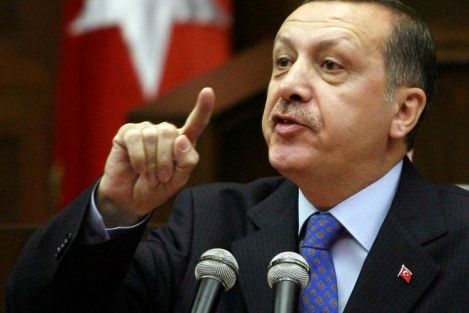
After Erdoğan

As these words buzz their way across the interweb to you, Turkey's prime minister is at home in Istanbul. He's not running the country; he's recuperating after surgery. It's a relatively routine procedure relating to his digestive system and it's certainly not life-threatening: he'll be back denouncing some rival or another at his party's parliamentary meeting in no time.
In a press release announcing the hospital visit, the office of Recep Tayyip Erdogan (for it is he) sounded almost anxious. The operation went "as planned at the beginning", we are told. "Our Prime Minister's health is absolutely fine. He plans to resume his routine engagements later in the week."
And so he did. He met the son of Bosnia-Herzegovina's founding president, then spoke on the telephone to his British counterpart David Cameron about Syria. Can't say fairer than that, really. Roll on next week's return to parliament.
But as Turkish domestic politics ticked along with routine and not-so-routine developments over the past few months of Mr Erdoğan's hospital treatment, it often fell to other people - such as Deputy Prime Minister Bülent Arınç - to speak for Turkey's government. For the first time in ten years, the talking head for the Turkish government has been not been Mr Erdoğan.
Don't let me mislead you: I'm not saying the prime minister is on his way out. He isn't. He intends to see out tenth year of his job in March 2013, and most likely the eleventh year too. Barring the unforeseen, there's very little that can unseat him until then. His party is riding high in opinion polls and loyalty to him within the party is strong.
But Mr Erdoğan's absence in recuperation might have shown us what the future looks like. Parliament recently decided that Turkey's first popular presidential election will be held in 2014 and Ankara's worst kept secret is that the prime minister wants the job for himself. If he does, he will win. He's more than popular enough to do it.
I first wrote about Mr Erdogan's presidential ambitions in 2006. At the time I said that a candidate for president requires experience, must be known by the public and liked by the public. He had no trouble meeting the last two criteria, I wrote, but as prime minister for a little under four years he did not have that statesmanlike quality - experience in government, knowing how the country runs - that an ideal president needs.
Since I wrote that, Mr Erdogan solidified his public support with victories in two general elections and two referenda. He challenged the Turkish army's influence over the state and won. He established himself as an internationally recognised leader for modern Islam. Whether or not you agree with his politics, the statesmanlike quality is now there.
President Erdoğan would assume his position with just under a year to go before parliamentary elections due by June 2015. The AK Party campaign would be led by a new man. The contenders to be that man are the usual suspects: Mr Arınç; Ahmet Davutoğlu, the foreign minister; Cemil Çiçek, the speaker of parliament; Ali Babacan, another deputy prime minster; or even Abdullah Gül, the current and ostensibly party-neutral president.
The problem is that there is no guarantee that any of these men would inherit the same job Mr Erdoğan vacates. A special parliamentary committee is currently working under Mr Çiçek's leadership to put together a new constitution, a new blueprint for Turkey's institutions which could produce a radical shake-up.
Mr Erdoğan is widely understood to favour a French-style presidential system with himself at the top. That would be a hefty change from the existing arrangement. The role of Turkey's president is notionally ceremonial, but holds considerable indirect influence over the country's institutions. The prime minister, meanwhile, holds more direct executive powers than in many Western democracies; if Mr Erdoğan had his way, a lot of these would simply transfer upward with him.
There is, however, widespread opposition to these plans. Prominent members of Mr Erdoğan's party - including some of those who might contend for his job - have publicly said a presidential system is not desirable to them. Much expends on what the new constitution looks like: little is known so far about the changes, if any, that will be made to the structure of Turkey's executive and legislature.
The new constitution will have to be approved by referendum and may require a renewed parliamentary mandate afterwards. That would mean fresh and early elections, in which Mr Erdoğan would lead his party once more.
The main question over Mr Erdoğan's future is not who will succeed him. It concerns the amount of executive power he thinks he can get away with as president. Watch parliament's constitution committee closely for an answer to that.

Sunday, 12 June 2011

Election 2007: timetable of events

Following on from yesterday's missive, a quick guide for when to expect what in Turkey's election today. Let's hope for a few surprises.

7am - voting begins in 32 eastern provinces, 8am in the west.
4pm - voting closes in the east, 5pm everywhere else. Counting begins soon after the queuing remainders have voted.
6pm - first results start trickling in to newswires and Twitter. Turkish TV wringing its hands showing lifestyle programming: no-one is allowed to report the results until the Electoral Commission lifts its election news ban.
Midnight - Scheduled end of Electoral Commission's ban on TV results coverage, allowing ample time to make sure every ballot box in the country is safely tucked away.
6.50pm - Around now, Turkish TV loses patience and switches to live coverage of Electoral Commission's front door. Reporters shout for permission to read out results that anyone with an internet connection has already seen.
7pm - Electoral Commission spontaneously announces every ballot box has been found, no-one is still voting in a remote village, and acquiesces: TV results coverage permitted.
7.01pm - Explosion of results. More than a quarter of all votes should have been counted by now; most will be from eastern provinces, where voting finished earlier. AK dominate in the northeast, so will have won most of the seats so far. The fate of the BDP independents should be clearer too. Watch out for Leyla Zana in Diyarbakır.
7.45pm - First substantial results from the west by now. If vote counting is as fast as it was in 2007, the networks should be calling the election for AK around now too. The size of their majority will depend on whether MHP has crossed the threshold.
8.30pm - Vote share for all three main parties should be roughly clear by now, unless the MHP really is on a knife-edge.
10pm - Final colour of Istanbul's 85 seats should be clear by now.

Saturday, 11 June 2011

Golden Numbers of Election Night

Alas, James in Turkey will shirking its good name for this Sunday's election. The bright lights of other events around the same time have been enough a distraction to prevent travel to Turkey, or even to cover the vote from afar. Selections from this blog's coverage for the last time the country did this is still available, though.

By way of recompense for the radio silence around this election, however, allow me to offer the Golden Numbers of Election Night. This is your indispensable guide to the numbers to watch out for as the votes are counted, categorised by political party:

AK Party
Justice and Development Party, religious conservative, governing
276 - absolute majority: the number of seats AK need to govern alone for a third term.
330 - the number of seats needed to change the Turkish constitution, pending approval in a referendum
367 - supermajority: the number of seats needed to change the Turkish constitution without a referendum

CHP
Republican People's Party, centre-left, main opposition
21% - CHP's share of the national vote in 2007's general election
23% - CHP's share of the national vote in 2009's local elections
Anything above 25% would represent a significant improvement on CHP's previous performance, which had exploited a saturated secularist constituency.
Anything above 30% would be an excellent result, a victory for leader Kemal Kılıçdaroğlu, and possibly enough to prevent AK receiving an absolute majority.

MHP
Nationalist Action Party, right wing, opposition
10% - the national share of the vote MHP must cross to win any seats. Stay above, and they could win as many as 70 seats. Fall below, and even provinces the MHP is projected to win - like Mersin and Osmaniye - are likely to fall to AK, possibly helping the governing party towards a supermajority.

BDP
Peace and Democracy Party, pro-Kurdish, candidates running as independents
20 - the minimum number of seats required to form a group in parliament, receive additional funding, and be represented in parliamentary select committees
21 - the number of seats won by pro-Kurdish candidates at the last election
30 - the highest number of seats pro-Kurdish candidates could realistically win in this election, making them kingmakers in a parliament where AK falls short of one of its majorities

Sunday, 20 February 2011

MHP crashes below threshold in opinion poll, but result is really a CHP victory

Just two parties are likely to cross the 10 percent threshold at the next Turkish election, according to the latest Haberturk/Konsensüs opinion poll. The results, which paint a dangerous picture for voter representation in Turkey, suggest the right-wing Nationalist Action Party (MHP) has the support of only 8.5 percent of voters, which would be the party's worst showing at a general election for nine years.

Just under a quarter of respondents were undecided, said would spoil their ballot or declined to answer the question. Here was what Konsensüs found, with the undecided vote shared among the parties and changes from the previous month's survey in brackets:
AK Party: 49.6 (+3.6) [Justice and Development Party, governing, religious conservative]
CHP: 26.8 (+0.3) [Republican People's Party, secularist]
MHP: 11.1 (-1.4) [Nationalist Action Party, nationalist]
BDP: 6.9 (+0.2) [Peace and Democracy Party, pro-Kurdish]
SP: 0.8 (-2.4) [Felicity Party, strongly Islamist]
Others: 5.6 (+0.5)
AK Party sources were delighted: this poll appears to confirm that their oft-repeated target of a 50% is quite attainable. Press coverage has also focused much on the fate of the MHP, which falls foul of the electoral threshold before the undecideds are shared out. It confirms fears that the dwindling support of the nationalists means that they have a real battle on their hands to ensure they actually make it into the chamber.

But press coverage of the results seems to have overlooked the support of the main opposition Republican People's Party (CHP). Take a look at my estimated calculations of what parliament would look like (based, as ever, on my calculations**, and with changes from the 2007 election result):
AK Party: 301 (-40)
CHP: 162 (+50)
MHP: 67 (-4)
BDP: 20 seats (no change)
Total: 550 seats
These results would give AK a majority to govern alone - just. But they would also give the CHP their best results since 2002, but this time in a parliament of three parties, not two. This parliament would have a much stronger opposition, despite the rise in AK's share of the vote. It would be an excellent result for Kemal Kılıçdaroğlu, CHP leader.

A few other observations from this opinion poll:

  • Voters appear to be flocking towards the larger parties. Fewer people said they will vote for the far-right BBP or the fundamentalist SP. This trend suggests Turkish voters are increasingly aware fringe parties are unlikely to be represented in parliament.
  • Konsensüs posed a number of "problems" in Turkish current affairs and asked which party was best-placed to solve them. The AK Party, unsurprisingly, led in them all, but it was interesting that just a few percentage points separated them from the CHP when asked which party was best placed to solve "inequalities in income distribution". A sign that the CHP's return to social democratic roots might be taking hold?
  • Most importantly, this poll was conducted well over a month before the election campaign kicks off. There's plenty that can change between now and 12 June.


* Konsensüs interviewed 1500 people by telephone across Turkey between 2 and 10 February 2011.
** This is a crude and entirely unscientific swing, assuming the 10 percent electoral threshold is not lowered and the pro-Kurdish BDP's 20 MPs decide to run again as independents.

Monday, 17 January 2011

Who will win Turkey's next general election?

Some astonishing news for you: Turkey's parliament is playing by the rules. That's right. The Grand National Assembly is preparing for an election at the scheduled time.(*) For the first time in decades, longer than most of us can remember, Turkish people will not be dragged to the ballot box because of an exodus of MPs from the ruling party, or a collapsed coalition, or a military intervention. No, the 2011 general election will take place because the rulebook, Turkey's constitution, says it is time for one.

You could say this is a sign of more stable, predictable times in Turkish politics. To a certain extent, you would be right. With six months to go until voting day it looks like AK, the party of Recep Tayyip Erdoğan, prime minister, is set to win a third consecutive victory.

That shouldn't surprise many people. Mr Erdoğan's party has a solid record of progress, and it would take someone quite obstinate to argue Turkish people are not better off now than when AK came to power in 2002. Opinion polls suggest the ruling party is likely to win around 45 percent of the vote, close to what they got last time.

But even though the victor is already pretty clear, it is an important election for Turkey. This is what I will be watching out for over the coming six months:

1) Distribution of seats in the new parliament

An AK victory might appear inevitable, but the size of that victory is far from certain. One reason for this is the resurgence of the main opposition CHP. Their newish leader Kemal Kılıçdaroğlu has been working to collect the anti-AK vote under one roof, and has had some success in broadening his party's appeal to voters who supported the right-wing Nationalist Action Party (MHP) at the last election.

Analysts believe that if the CHP can win 30 percent of the vote (up from 20 percent in 2007), they can seriously dent AK's chances of governing alone by winning enough seats to rival them in the chamber.

AK's target is for at least 50 percent of the popular vote. CHP are aiming "to govern alone". Both seem quite far-fetched at this stage, but both objectives reflect the two parties' urgency to win as many seats as possible.

2) The fate of the nationalists

Turkey's electoral system operates a 10 percent threshold. If a party's national share of the vote does not cross that line, it cannot be represented in parliament, regardless of how well they do in individual provinces. As I blogged yonks ago, it's too high and needs to be lowered, but it has helped the AK Party win two crushing parliamentary majorities. Unsurprisingly, they aren't about to kick away the ladder that carried them up to where they are.

AK and the CHP are probably both going to cross the threshold this year, but the same can't be said for the MHP. Polls suggest Devlet Bahçeli's party is in trouble. By some estimates, they may crash below the threshold and out of parliament. That would be in the interests of the two larger parties, giving both of them more seats to play with.

It would not be in the interests of democratic representation. Just over half - 55 percent - of Turkish voters were represented in parliament after the 2002 election because AK and the CHP were the only parties who crossed the threshold. MHP joined them after the 2007 election, meaning that four in every five votes, a better proportion, were represented. Turkey is too pluralistic for at two-party system. A third party must cross.

Nonetheless, all three parties have been stepping up the nationalist rhetoric in recent weeks, which might explain Mr Erdoğan's bizarre intervention to tear down a statue near the Armenian border or his recent war of words with German chancellor Angela Merkel over her recent visit to the Greek side of Cyprus. Expect Israel or the EU to come up before long.

3) What will the prime minister do next?

This is the biggie. Mr Erdoğan has already said that this next term will be his last as leader of his party. He has spoken somewhat wistfully of disappearing somewhere quiet and warm to write his memoirs, but most commentators reckon he has ambitions for the next rung of the ladder - the presidency.

Whether he can achieve this depends on what happens to the incumbent, his former deputy Abdullah Gül. When Mr Gül was elected by parliament in 2007, it was for a single seven-year term, much like his predecessors. But one month later the constitution was amended by referendum: Turkish presidents are now elected - by the people, not parliament - for a maximum two five-year terms.

It is still not clear whether Mr Gül's term of office will measured by the old rules under which he was elected, or the new rules that replaced them. He could have to stand for re-election as early as next year, or serve until 2014. Of course, Mr Erdoğan could start work after the parliamentary election on a new constitution that changes the system entirely - rumours abound of a French-style presidential system, which Mr Erdoğan is understood to covet.

4) The date and the candidates

Sunday 12 June is everyone's best guess for voting day, supported by both CHP and MHP. The government has until March to fire the starting gun, however, and chances are they'll take their time.

In the meantime, the parties have been thinking about their candidates for parliament. Political parties in Turkey are extremely centralised, with every list - 81 of them, one for every province - being personally endorsed by the party leader. In 2007, AK notoriously culled large numbers of its 2002 intake to make way for those who had curried greater favour, and could do the same again.

Interesting names are being banded about, too. Erkan Mumcu - a former AK minister who held the key for Mr Gül's first presidential run, dropped it, then disappeared into nothingness - is reportedly considering a run on the MHP ticket.

An interesting few months await.


(*) Well, nearly. Following the 2007 referendum, Turkish terms of parliament were reduced from five years to four, which means this year's election should be held on 22 July, but given that people last time were queuing in temperatures above 35°C last time, voting looks likely to be brought forward a month.

Sunday, 6 June 2010

Poll shows first CHP lead in eight years

The week's events in the Mediterranean have clouded many things, including an interesting set of opinion polls published by SONAR at the end of last month. Here are the topline percentages for voting intention, with changes from the company's last published survey in January:
CHP: 32.5 (+5.4) [Republican People's Party, secularist]
AK Party: 31.1 (+1.6) [Justice and Development Party, governing, religious conservative]
MHP: 18.6 (-1.8) [Nationalist Action Party, nationalist]
BDP: 4.3 (-2.0) [Peace and Democracy Party, pro-Kurdish]
SP: 3.7 (-1.8) [Felicity Party, strongly Islamist]
DSP: 3.5 (+0.5) [Democratic Left Party, centre-left]
DP: 2.4 (-1.7) [Democrat Party, centre-right]
Others: 4.0 (+2.1)
This poll represents the first time in eight years that the governing AK Party has lost the lead in SONAR polling. The source of the CHP bounce is, of course, largely the rise of Mr Kılıçdaroğlu to the leadership: the fieldwork was done in the five days immediately following his election. A new face at the head of a major political party means increased media coverage at the expense of the governing party, and a general sense of change and optimism.

On a crude and entirely unscientific swing, assuming the 10 percent electoral threshold is not lowered and the pro-Kurdish BDP's 20 MPs decide to run again as independents, this poll would roughly produce the following seat distribution in parliament (with changes from the present situation):
CHP: 209 seats (+110)
AK Party: 201 seats (-135)
MHP: 120 seats (+51)
BDP: 20 seats (no change)
Were a general election to produce this result, this would be firm coalition territory for Turkey. CHP and AK would be near equals in parliament, both requiring the support of the nationalist MHP to form a government. It's disconcertingly reminiscent of the 1970s, when CHP and the centre-right Justice Party were near-equal forces, and wholly dependent on smaller parties to govern. Regardless, it's a striking change from the last opinion poll I looked at in January, which produced a clear AK lead just short of an overall majority.

SONAR are making much of the fact that it is the first time their polling has shown a CHP lead for eight years. While that is a remarkable achievement, there are some points of caution:
1. AK has also recorded an increase in support, albeit considerably smaller than that of CHP.

2. Voters are becoming polarised. It appears the anti-government vote - supporters of the MHP, the BDP and the centre-right DP - is rallying behind CHP, while the CHP's recent prominence has persuaded some supporters of the strongly Islamist SP to turn to the AK Party.

3. The difference between CHP and AK - 1.4% - is well within SONAR's margin of error of 1.7%, which suggests CHP's lead is still extremely slim, and that the poll could have produced a narrow AK Party lead.
There are other anomalies too. Support for the centre-left DSP has increased at a time when the centre-left appeared to be collecting around Mr Kılıçdaroğlu. Rahşan Ecevit, the DSP's founder, former stalwart and wife of the late prime minister Bülent, is among those to shift her loyalties to the CHP, which is why the DSP increase is interesting.

The large increase in support for other parties is partly down to SONAR no longer publishing the results for the far-right Great Union Party (BBP, 2.2% in January) separately.

Most important, however, is that this poll was conducted in its entirety before Israel stormed that Turkish ship carrying aid to Gaza. The response of Recep Tayyip Erdoğan, the prime minister, has been strongly endorsed by many Turks. As in most cases of international crisis, the opposition - including Mr Kılıçdaroğlu - have been sidelined into issuing mild statements of support. It will be interesting to see how that reflects into the next opinion poll.

SONAR interviewed 3000 people in towns and villages in 16 Turkish provinces between 24 and 27 May 2010. The full survey can be found here.

Saturday, 16 January 2010

AK support down in latest GENAR poll

GENAR's quarterly survey was published earlier this week. For national voting intentions, the headline percentages were (with changes from the previous quarter):

AK Party: 36.5 (-1) [Justice and Development Party, governing, religious conservative]
CHP : 22.9 (-1.8) [Republican People's Party, secular]
MHP : 18.8 (+1.3) [Nationalist Action Party, nationalist]
BDP : 7.1 (+0.5)* [Peace and Democracy Party, pro-Kurdish]
SP : 4.0 (-0.4) [Felicity Party, strongly Islamist]
Others : 10.8 (+1.5) [includes independents]

On a crude uniform swing, assuming the BDP's 20 MPs run as independents and retain their seats, this would translate into following seats in parliament (with changes from the present situation):

AK Party: 247 (-90)
CHP : 155 (+58)
MHP : 128 (+59)
BDP : 20 (NC)

Such a result in a general election would leave Turkey in coalition territory again: AK would not have enough seats to govern alone, but would need just a handful of seats (i.e. within the broad margin of error) to enter into coalition with BDP. CHP and MHP would also be able to form a government together with these figures, although the balance between these two would be much more evenly weighted.

Of course, the above paragraph is entirely hypothetical. It assumes many uncertain things: that the voting trend would be exactly the same nationwide; that the Democratic Left Party (DSP) would run on the CHP ticket, as it did in 2007; that BDP MPs would run as independents to overcome the 10 percent threshold, as they did in 2007; and that no other party members will try the BDP's tactic.

The election itself is still 18 months away, and there are a few things we know will happen before then. Abdüllatif Şener's Turkey Party has yet to make an emergence, while Mustafa Sarıgül's new centre-left movement has yet to mobilise. Political parties are transient things in Turkey, you never quite know how they come and go, but it seems pretty certain they will make some impact.

Support for the government's "democratic initiative" - that is, its policy of new rights and institutions for Kurdish citizens - appears to be strictly along party lines. While AK voters support the programme overwhelmingly - 63% - all opposition voters are overwhelmingly against: 87% of CHP, 89% of MHP and, interestingly, 68% of BDP supporters expressed the opinion that the initiative "would not succeed". Overall, 61% said they found it "not positive" or "not positive at all".

GENAR also asked about the government's parallel initiative towards Alevi citizens, which appears to find slightly greater support. AK voters were the only majority supporters again, albeit by a much narrower majority (52%). Opposition party voters ranged from a near-even split (BDP and Democrat Party voters, 48% and 46% in support respectively) to a strong rejection (CHP and MHP voters, 22% and 17% in support).

The survey also appears to suggest:

- The recently-merged Democrat Party has made little impact, polling just 2 percent (change from previous survey unknown).
- The nationalist vote has shifted towards MHP. The Great Union Party (BBP), a spin-off grouping that displays even more extreme right-wing tendencies than the MHP (if such a thing is possible), had done rather well by taking the town of Sivas in last year's local elections. GENAR's latest poll suggests support for the BBP has halved. In response to another question, nearly 10% gave MHP leader Devlet Bahçeli as their "favoured politician of 2009", placing him second only to Prime Minister Recep Tayyip Erdoğan (27%) and ahead of CHP leader Deniz Baykal (8%).
- Abdüllatif Şener, leader of the low-profile Turkey Party, does have some limited recognition. He also featured on the "favoured politician of 2009" list. 1.5% of respondents mentioned him by name; a third of them were CHP supporters, more than any other party, even Mr Şener's former AK.
- Valley of the Wolves: Ambush, the programme at the centre of the past week's diplomatic spat with Israel, topped the list of favourite television dramas for 2009.
has nationalist vote. BBP got just 1.6 percent.
GENAR interviewed 2095 people in 17 Turkish provinces between 02 and 11 January 2010. The full survey can be found here. * Figures compared with the defunct Democratic Society Party.